Four messages were held, and they would be deleted within 24 hours unless the recipient clicked a button. The emails were not from Microsoft, but they cited a real incident number for a real Microsoft 365 disruption.
In this article
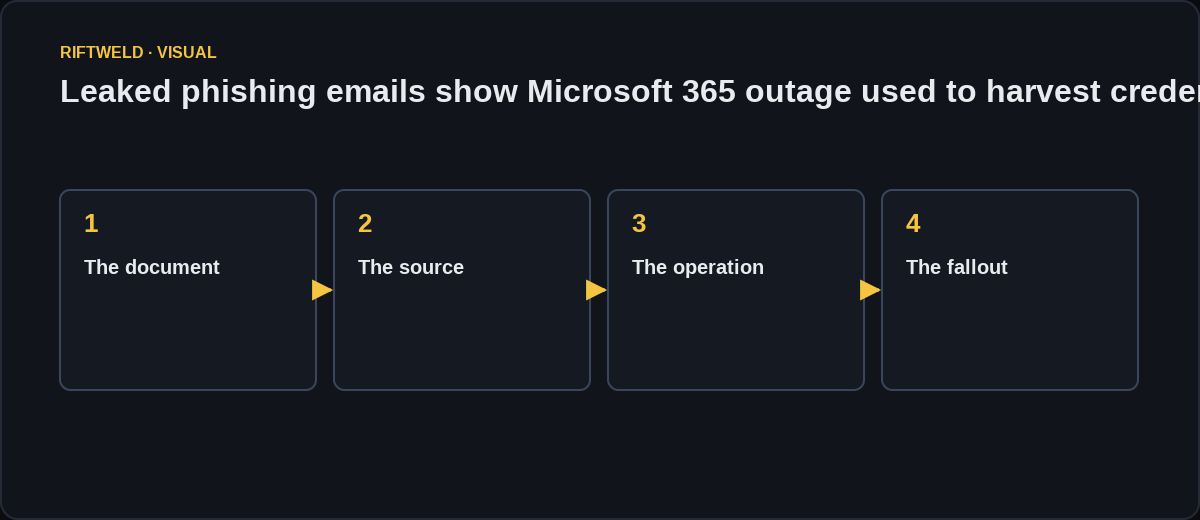
The document
The phishing message opens with a claim that reads like a genuine service notice: "Mail delivery to your mailbox during the Microsoft 365 disruption on 12 November 2026 (incident EX1550543), mail flow through Exchange Online was interrupted and delivery to your mailbox failed." It then says four messages were being held and would be deleted unless released. The message carries a prominent "RESTORE MESSAGES" button, or in some samples "TAKE ACTION" (simcoe.com).
Microsoft Threat Intelligence published its analysis of the campaign on November 16, 2026. The company said it observed the coordinated, high-volume campaign on November 13, targeting organizations across multiple sectors worldwide. The messages were disguised as Microsoft 365 service-health notifications and used the disruption to create urgency (Microsoft Security Blog).
The subject line followed the pattern "Outage -
That is not what happened. The outage was real, and the incident identifier was real. Microsoft tracked the Exchange Online failure as EX1550543, and the phishing messages used that identifier to borrow credibility from Microsoft's own status reporting (SecurityWeek).
The source
The source of the lure was a genuine technical failure. Microsoft said the November 12 disruption was caused by an error during a network capacity upgrade, followed by a network change that exposed the problem. The company stated: "This was a technical issue not related to cyber or AI / agents" (SecurityWeek).
The failure affected Exchange Online and Outlook, with possible effects on Teams, SharePoint Online and Microsoft 365 Copilot. Organizations and government agencies in several countries reported interrupted email and other operations. The scale of the disruption gave the phishers a ready-made story for anyone who had watched their own mail fail (heise online).
Microsoft Threat Intelligence then found the emails. The company said the messages used sender domains including moments-notice[.]com and planetmaison[.]com. They also used email-delivery and link-tracking infrastructure to generate recipient-specific URLs, which redirected to reallifeaccounting[.]com, including the path /themelist0.html in some samples (Microsoft Security Blog).
Recipient-specific tracking links matter because they turn a mass mailing into a measurable operation. The infrastructure can record who clicked, which organisation the address belongs to and which lure was used. It also makes each message look less like a bulk send, because the URL is not identical for every recipient (SecurityWeek).
The operation
The attack chain begins with delivery from the sender-domain cluster. The subject carries a randomised token, and the body includes a fake email conversation positioned to be hidden from the recipient. Microsoft describes this as an apparent attempt to evade mail filtering (Microsoft Security Blog).
The message then impersonates Microsoft 365. It references Exchange Online, Outlook, Teams, SharePoint and Copilot, and it borrows the appearance of a service-health notice. The social engineering claim is simple: mail was held during the outage, and the recipient has one day to recover it. The button supplies the action (Microsoft Security Blog).
The click is the pivot. A recipient-specific tracking URL records or routes the interaction, then the link chain leads to the non-Microsoft destination. The sample set was link-based. Microsoft observed no QR codes, no non-EML attachments and no executable, archive or document payload. The off-brand destination and the Microsoft 365 impersonation support an assessment of likely credential phishing (Microsoft Security Blog).
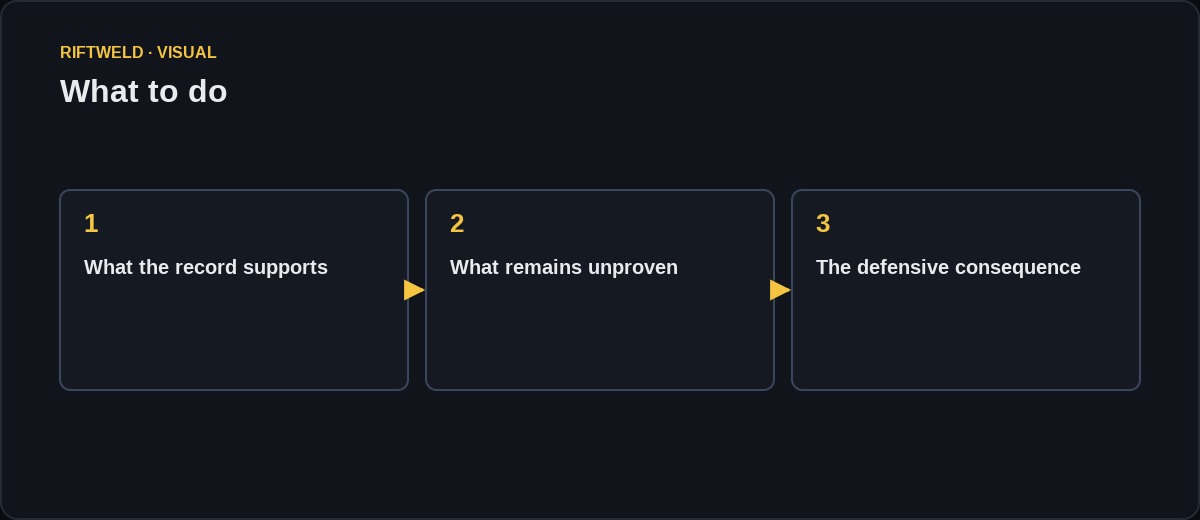
The evidence stops at the link. Microsoft said its analysis did not include the final page source, credential fields, credential-submission telemetry or post-compromise activity. The company put it plainly: "The activity is consistent with credential phishing, although credential collection and malware delivery have not been confirmed" (SecurityWeek).
The fallout
Microsoft Defender for Office 365 blocked and quarantined the messages, and Microsoft Defender blocks the associated malicious domains. The company said it had not observed any indicators of compromise from this attack in protected environments. That is a statement about Microsoft's visibility, not a guarantee that no recipient elsewhere submitted credentials (Microsoft Security Blog).
The residual risk sits with the user who clicked. Microsoft says organisations should search mail telemetry for the sender domains, subject patterns, lure phrases and destination domain, then quarantine matching messages. They should also identify users who clicked, using click telemetry, proxy logs and browser or endpoint evidence, to determine whether the destination was reached and whether credentials may have been entered (Microsoft Security Blog).
If credentials were entered, the consequences extend beyond the mailbox password. Microsoft lists account compromise, mailbox access, business email compromise, internal phishing, inbox-rule manipulation and access to cloud collaboration data. A stolen session can also be used to request OAuth consent, giving an attacker durable access that survives a simple password reset (Microsoft Security Blog).
The defensive lesson is narrow. Blocking the word "outage" in a subject line would not have caught these messages, because the subject carried a random token and the body carried a genuine incident number. Defenders need to verify the sender, inspect the destination domain and block the known malicious infrastructure. Microsoft also advised security teams to verify service incidents directly through the Microsoft 365 admin centre rather than trust a link in an email (SecurityWeek).
What we still don't know
Microsoft has not attributed the campaign to a named threat actor or malware family. The company also warned that multiple threat actors may continue to look for ways to exploit notable global events in social engineering pretexts. The incident number was public, the outage was visible and the deadline was plausible. That combination can be reproduced (Microsoft Security Blog).
The record cannot say how many recipients clicked, how many submitted credentials or how many accounts were subsequently abused. It cannot say whether the tracking infrastructure was used to segment targets by sector or organisation size. It also cannot say whether the same operators ran the sender domains and the destination site.
The question the record cannot answer is the one Microsoft left open: "The activity is consistent with credential phishing, although credential collection and malware delivery have not been confirmed."